Sunday, 3 October 2021

Federal Herds Critical To Preserve Wild Bison


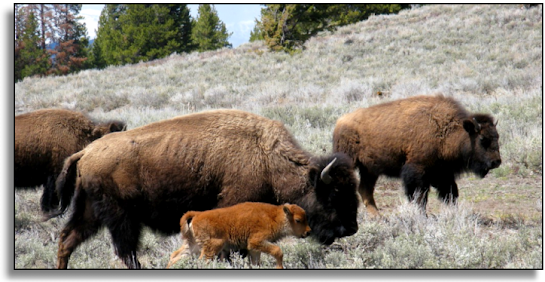
Domestication is a major threat to wildness of plains bison. To retain wild genetics, a bison herd must be influenced by a preponderance of natural selection. However, herds are also subjected to genetic drift and artificial selection that replace or weaken natural selection, fostering domestication – a simplification and disorganization of the wild genome.

Genetic drift, the random transfer of genes across generations, is significant in herds <1,000 bison. Artificial selection includes interventions such as selective culling, vaccinations, and emergency feeding, and less recognized indirect effects from maintaining an unnatural herd sex-age composition, and a stable herd size at a relatively low ecological density on a small, uniform range.

In the USA, there are about 300,000 plains bison in private, public and Tribal herds, inciting beliefs that a future for wild bison is secure. But most herds are small with significant genetic drift; and are subject to many forms of artificial selection.

With over 250,000 bison, private commercial herds of livestock bison will contribute little to retaining the wild bison genome. Native American herds (about 20,000 animals) are touted as saving wild bison; but most are managed much like livestock. Tribes have important nutritional and economic needs for their bison. Intra-tribal support for wildness of bison has been uncommon or unclear, and inconsistent. Recently, the largest Tribal herd was cut from 2,000 to 200 bison.

About 30 “conservation herds” of bison owned by the Nature Conservancy or state or local governments are mostly small and subject to much artificial selection. Among these, only the American Prairie herd in Montana has goals for several thousand bison exposed to much natural selection. But these are legally private livestock and plans for American Prairie bison have been delayed and jeopardized by political opposition based in the livestock industry.

Consequently, only 15 plains bison herds in National Parks and Wildlife Refuges are managed under reliable, legal mandates to preserve wildness. The Park Service and federal refuges are mandated to retain the genetic integrity and natural ecological relations of wild bison. However, most these herds have only 300-500 bison. Only 2 herds have at least 1000 bison. These 15 herds will not suffice, in the long term, to provide a diversity of natural selection and retain the full suite of wild characteristics imbedded in bison genomes.

This emphasizes the need to restore public, wild bison on the Charles M. Russell Wildlife Refuge. It is the largest federal refuge within the historic range of plains bison. Unsuccessful efforts to reintroduce bison in this area go back to 1910. Bold federal action is needed to develop a truly wild bison herd in this, the best available location for reestablishing wild plains bison in the USA.



Thursday, 19 August 2021

Bison Restoration Needs a Cooperative, Not Divisive, Solution


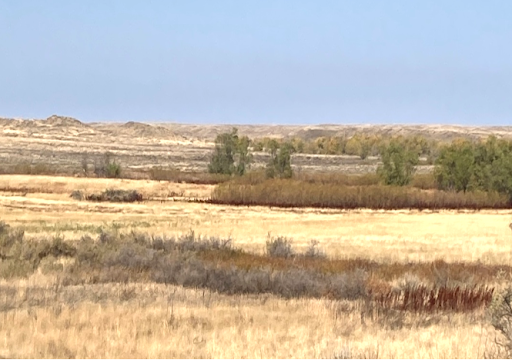
Potential abundant bison habitat on the CMR Refuge


The long-standing hope for restoring wild bison on the Charles M. Russell National Wildlife Refuge is generating an unusual amount of publicity. Unfortunately, the issue is becoming confounded and divisive, diminishing prospects for any solution. The Coalition suggests three foundations for a way forward.

First, bison for the CMR Refuge has to become a national issue. Montana will not participate in a reintroduction for the foreseeable future. The Department of Interior must restore bison to the Refuge unilaterally.

In 2021, the Montana legislature and Governor put a legal capstone on 110 years of Montana opposition to bison restoration in the state. Prohibiting bison restoration by the state will not be changed without voiding laws by a very different legislature and Governor. Promoting stakeholder support for bison in isolation from numerous other partisan political issues will not accomplish this change. It is time to recognize that many decades of Montana political opposition to bison will continue. This opposition has violated the Refuge obligation for federal/state cooperation that produces timely and effective management of the Refuge and justifies federal action on the Refuge without Montana support.

Second, we propose the issue of restoring wild bison be considered separately from the much larger issues of environmental justice and Native American reparations, including the “Land Back” movement. These larger issues are complex and involve alternative beliefs, perspectives and interpretations of history. Consensus on these issues may never occur, rendering bison restoration on the Refuge improbable.

We believe the issue of bison restoration should focus on but two issues: What are the values associated with Tribal-trust bison, and what are the values associated with public-trust bison on public lands; and how can we best achieve both these goals. This is the way forward for any foreseeable progress.

Third, achieving both these sets of goals and their respective values, should be a cooperative, not divisive process. Many Tribes seek access to bison and bison habitat for cultural, spiritual, nutritional and commercial values. The Coalition supports achievement of these values. In contrast, goals for public-trust bison on a federal Refuge, as stated in federal law, are biological diversity and integrity and recreational benefits for the general American public, including Native Americans. The two sets of goals are, in many ways, incompatible. But goals for Tribal-trust bison can be maximized on Tribal lands; goals for public-trust bison can be maximized, perhaps only, on National Parks and Refuges. Each side of this already divisive issue should act to promote achieving both sets of goals in this manner. We should focus on the goals, and how best to mutually achieve them.


Sunday, 15 August 2021

Wild Bison Lose Two More Great Friends And A Supporting Organization


Joe Gutkowski


Recent months and an aging generation have produced sorrowful times for proponents of public-trust wild bison on the Charles M. Russell National Wildlife Refuge. Last year’s passing of Jim Posewitz foreshadowed an end to Montana’s prolonged efforts to restore a wild bison herd to the state. The 2021 legislature ignored Jim’s final advice, foreclosing all Montana efforts toward wild bison for the foreseeable future.

More recently, two more of our comrades, Joe Gutkowski of Montana and Valerius Geist of Canada, left us for the last time.

Joe Gutkowski passed at the age of 94. Beginning as a smoke-jumper and fire fighter, Joe had a long career with the U. S. Forest Service, always a spokesperson for forest management to benefit all the American people. Then, in a long retirement, Joe continued his conservation activities, particularly for wild rivers, wildlife, and especially bison restoration. Joe was an early advocate for the ambitious Big Open project, and was a strong supporter of the Montana Wild Bison Restoration Coalition. We, and the bison, miss Joe.

Valerius Geist was less well-known in Montana. Val was an artist, philosopher (lover of learning) and, above all, a biologist based in evolutionary biology. His interests, centered on large wild mammals of the Northern Hemisphere, generated about 20 books. These included Buffalo Nation: History and Legend of the North American Bison. He wrote: “Keeping bison in fenced spaces is a stop-gap conservation measure at best. Protected in enclosures, buffalo are inadvertently managed for tractability and they are on their way to domestication. This includes weakening or destroying their anti-predator abilities through genetic decay.” Val’s efforts to educate the public, and much of the profession of wildlife management, on the requisites for preserving wildness, have yet to be realized.

Also sadly, the Montana Sierra Club has decided to withdraw as a supporter of the Montana Wild Bison Restoration Coalition. The Club disagrees with our insistence, supported by federal law, that any bison restored to the Charles M. Russell Refuge must be public-trust bison for purposes of benefitting all the general American public. 


Wednesday, 11 August 2021

Coalition Supports Dual Approach To Federal Bison Restoration


The Montana Wild Bison Restoration Coalition has petitioned Department of Interior Secretary Deb Haaland and the U. S. Fish & Wildlife Service to proceed on separate parallel paths for restoring bison on Native American lands and on federal lands, including the Charles M. Russell Refuge. Secretary Haaland oversees both the Fish & Wildlife Service and the Bureau of Indian Affairs.

Following Montana’s most recent rejection of bison restoration by the legislature and governor (News 23 May), two competing proposals have arisen for federal restoration of bison on the Russell Refuge. A proposal supported by Native Americans would have Tribal-trust bison on the federal refuge, administered by an inter-tribal council and managed by Tribal biologists, with emphasis on bison for cultural, spiritual and nutritional needs of an unspecified number of Tribes. This proposal was developed largely with support of the National Wildlife Federation (News 19 June). Its application would compromise Congressional mandates for biological diversity and integrity on the Refuge.

Our Coalition preferred restoring public-trust bison on the Refuge, with benefits for all Americans, including Native Americans, as mandated by Congress (News 1 July). Competition between the two proposals has become divisive at a time when respectful teamwork and cooperation are much needed in American politics. We suggested that the Department of Interior initiate a dual-program of bison restoration to best fulfill the overlapping, but somewhat incompatible goals of these two proposals.

Tribal goals for bison management can best be fulfilled on Tribal lands, not through compromising statutory mandates on the Wildlife Refuge System. At least 69 Tribes in 19 states already have over 1500 square miles dedicated to bison herds. Department of Interior should continue to support expansion and management of bison herds in Indian Country. This proposal is outlined in House Bill 5153 that was introduced in 2019 by then Congresswoman Haaland. Much of it can be facilitated by administrative actions under existing law.

Along a parallel track, Department of Interior should accelerate achievement of already established federal goals for restoring public-trust bison, and securing the wild bison genotype, on National Parks and Wildlife Refuges. Restoration of bison on the Russell Refuge is the best opportunity to satisfy these goas south of Canada (News 1 July). 


Monday, 12 July 2021

National and Montana Wildlife Federations Petition for CMR Bison


The National Wildlife Federation and the Montana Wildlife Federation have sent a joint petition to Interior Secretary Deb Haaland, requesting “a more active role” by the Fish & Wildlife Service in restoring wild “buffalo” on the Charles M. Russell National Wildlife Refuge.

NWF/MWF use of the name “buffalo” is a deference to the preference of Montana Native American Tribes for identifying bison. A previous NWF brochure used “bison”.

The two NGOs note the Refuge “represents a tremendous opportunity for buffalo conservation and restoration” and propose that the U. S. Fish & Wildlife Service take “a more active role in the species recovery.”

They request an open, public NEPA process to “determine what a herd would look like”, source of founding animals, and “what entities would be engaged in management.”

They note that “American Indian Tribes should have a significant role in the restoration of buffalo on the CMR Refuge” and recommend that “tribal partners” be engaged in reintroducing buffalo to public lands. The latter recommendation could support a broad application of some unstipulated administrative and management roles for Tribes on other National Parks and Refuges, beyond the CMR.

The petition fails to define if “restoration” includes long-term management, or what bison-herd characteristics would constitute “species recovery.” Since NWF has previously sent the Department of Interior an extensive document outlining a CMR bison restoration with abundant intertribal administration and management by Tribal biologists, the vagueness of this current petition provides tacit support for any or all details of that document. To our knowledge, the 2020 document was never distributed publicly. (See News, June 19 for our concerns with the 2020 document.)

Since Montana has rejected bison restoration on the CMR (News, May 23) we welcome NWF/MWF support for independent FWS action. However, we stand by our position that “We need a public-trust wild bison herd on the Russell Refuge to fulfill the egalitarian mission of the Refuge System, particularly under mandates of the National Wildlife Refuge System Improvement Act, to benefit the general American public, including Native Americans” (News July 1).

Thursday, 1 July 2021

Coalition Petitions Department of Interior for Public-trust Wild Bison on CMR Refuge


The Montana Wild Bison Restoration Coalition has petitioned Secretary of Interior Haaland and the U. S. Fish & Wildlife Service to preemptively restore bison on the Charles M. Russell National Wildlife Refuge, with or without the state’s blessing. Major portions of the letter are presented here.


The Montana Wild Bison Restoration Coalition is a non-profit organization with supporters from across the nation. We are focused on restoring public-trust, wild bison on the Charles M. Russell National Wildlife Refuge and nearby public and private lands where bison are accepted. Last year, we submitted a proposal to Montana Fish, Wildlife & Parks for a test reintroduction of bison to the Refuge, as a coordinated state/Fish & Wildlife Service project. That proposal has been rendered moot by state actions. Wordings in quotes below are taken from the National Wildlife Refuge System Improvement Act (1997).

This year, the Montana legislature and governor have ignored majority public opinion and rejected any state participation in a bison restoration project for the foreseeable future. New Montana bison law even denies the FWS definition of “wildlife” in 5(7) of the Refuge System Improvement Act. These actions follow decades of Montana obstinacy toward bison restoration, even on federal lands. They confirm that, for bison restoration, “timely and effective” cooperation and coordination with the state has been demonstrated as “impracticable”, justifying preemptive action by the Fish & Wildlife Service to fulfill the mission of the Refuge System to “benefit the general American public”.

The mission of the Refuge System and goals of the Russell Refuge Plan cannot be fulfilled without restoring wild bison as a keystone, public-trust species on the Refuge.

We request a reintroduction of plains bison to the Charles M. Russell National Wildlife Refuge under the preeminent role of the FWS, with or without the state’s blessing. Since the 2012 Refuge Plan offered leadership of such a project to the state, a new analysis, amending the 2012 Plan, under the National Environmental Policy Act is likely necessary. Further delay is not justified. This NEPA process should summon appropriate national attention.

We request a federal, public-trust bison herd managed by the Fish & Wildlife Service, ultimately including federal management of public bison hunting on the Refuge. Goals of the project should conform to the mission of the Refuge System and goals of the Department of Interior Bison Conservation Initiative. Moreover, the CMR Refuge is the largest Refuge within the historic range of plains bison. For this and other reasons, it is a unique, irreplaceable opportunity to satisfy needs for a large, wild herd on a large, diverse landscape, as recognized by the DOI Bison Conservation Initiative.

Details of the restoration should be determined largely by FWS and USGS biologists and managers, including population geneticists, with public advice and comment. An adaptive management approach should be used. In particular, once the founding population is well-established, innovative hunting seasons and regulations should be tested by FWS, to provide for safe, quality hunting and practicable carcass processing and transport.

We are aware that Fish & Wildlife Service has received a proposal developed in 2020 by the National Wildlife Federation for a Tribal-trust bison herd on the Refuge. We appreciate Tribal viewpoints, but believe this proposal would complicate fulfilling goals and administrative requirements of the Refuge System and may conflict legally with its broader mission. We need a public-trust wild bison herd on the Russell Refuge to fulfill the egalitarian mission of the Refuge System, particularly under mandates of the National Wildlife Refuge System Improvement Act, to benefit the general American public, including Native Americans.


Saturday, 19 June 2021

National Wildlife Federation Report Promotes “Intertribal Bison Herd” on Charles M. Russell National Wildlife Refuge


The National Wildlife Federation has submitted a 71-page Report to the Rocky Mountain Tribal Leaders Council, outlining legal issues and management opportunities for establishing an “intertribal bison herd” on the Charles M. Russell federal refuge in Montana. The Report, released in spring 2020, was co-written by the Indian Law Clinic at the University of Montana.

The Report cites tribal treaty rights and federal trust responsibilities to justify use of the public Refuge for a bison herd managed under Tribal leadership and administration with an intertribal Advisory Council informed by “generations of wisdom, knowledge and expertise” through a panel of Tribal counselors. A “uniquely Tribal approach” would promote Tribal sovereignty, with enrichment of Native cultures as “a major goal”.

The proposed level of Tribal administrative and management authority may well violate mandates of Congress for the National Wildlife Refuge System. However, treaty obligations and tribal-trust responsibilities are complicated areas of law.

The Report has been submitted to the Department of Interior. It is cited in an April letter to Secretary Haaland from the Montana American Indian Caucus (News, 29 April). The letter also cites a December, 2020 contact from the Rocky Mountain Tribal Leaders Council to the Biden Transition Team, promoting bison restoration on public lands through partnership with the Tribes.

At last report, details of a current NWF position on tribal vs. federal restoration of bison on the CMR Refuge were unclear. The Report’s proposal has many troublesome aspects that deserve public exposure and discussion, especially among NWF members and contributors.

Our Coalition opposes the establishment of what would be Tribal-trust bison on the CMR Refuge. Briefly, our several reasons include: (1) Proposed intertribal management of CMR bison would dilute and unnecessarily complicate the legislated authority and primary obligations of the Secretary of Interior to manage Refuge resources. (2) Proposed Tribal goals, apportionment of benefits and intended management methods are unclear. They may interfere with or detract from fulfilling the primary mission of the Refuge System. In particular, gradual domestication of the bison may be fostered. (3) While Tribal wisdom, knowledge and expertise are not to be denied, they are limited in modern areas of population/evolutionary genetics, for which the Fish and Wildlife Service has superior resources. (4) An emphasis on Tribal needs and values would be inconsistent with the egalitarian mission of the Refuge System. (5) Tribes are not bereft of opportunities to achieve spiritual, cultural and economic benefits of wild bison across about 15,000 square miles of bison habitat on their reservations. (6) Tribal advice and some Tribal objectives can be used and accommodated with CMR bison strictly under FWS control. (7) The CMR Refuge and adjacent lands where bison are accepted are a unique opportunity for establishing a much needed large, public-trust, wild bison herd on a large, diverse landscape. This irreplaceable opportunity to accomplish goals of the Department of Interior Bison Conservation Initiative should not be jeopardized by complicating administrative efficiency or priorities among management goals. (Details of this position available on request, jabailey34@aol.com.)

Support for public-trust, wild bison on the CMR Refuge is our primary goal, justified by many values declared in this website. Since the state of Montana has rejected restoration of wild bison (News, 23 May) we will request Department of Interior Haaland to move forward with a federal restoration project, for a genetically adequate, wild bison herd under Fish & Wildlife Service management on the Charles M. Russell National Wildlife Refuge.