Thursday, 16 December 2021

Alaskans: On Indigenous Beliefs and Wilderness – Focus on Common Elements, not Differences


Artwork by Linsday Carron


A recent article from the Rewilding Institute, authored by a former U. S. Fish & Wildlife Service biologist and two Native Alaskans, cautions us not to focus on differences between traditional Indigenous beliefs and the “modern” wilderness concept. Rather, with the huge environmental threats that we all face, we should recognize what they have in common.

Roger Kaye worked for the U. S. Fish & Wildlife Service in Alaska for 41 years, as Native liaison and wilderness coordinator. He notes that early Indigenous people had no concept of wilderness, but neither did EuroAmericans before they were exposed to environmental degradations that led to developing the wilderness ethic. He cites the notion that “Wilderness” implies such pristine conditions that it fails to recognize the presence of Indigenous peoples on the prehistoric landscape - as an unfortunate misunderstanding. The notion is currently common within major environmental organizations, often justifying their diminished emphasis on Wilderness, replaced by support for “working landscapes”.

Kaye cites the Wilderness Act: “a place where man is [currently] a visitor and does not remain”, a place that appears to have been affected primarily by the forces of nature. He states the idea of Wilderness was a reaction against environmental threats of the industrial age. “It was certainly not at variance with the Indigenous people or their sustainable lifeways.”

Polly Napiryuk Andrews is Cup’ik Eskimo, working for the SouthCentral Native Foundation. She says “Too often we focus” on differences between the traditional world view and the Wilderness concept, “whereas commonality is what’s important”. She finds Indigenous traditional ways of expressing the relationships upon which our mutual well-being depends are reflected in early justifications of the Wilderness Act, recognizing dependence and interdependence, indebtedness, and responsibility.

Bernadette Dimientieff is Gwitch’in Athabaskan, pursuing protection of the Arctic National Wildlife Refuge and environmental justice. Her people have a spiritual and cultural connection with caribou that need the Refuge as a birthing ground. She states, “More than any other land category or management system, Wilderness recognizes our way of relating to the land and the Earth. The Wilderness idea that humans are part of a larger ‘community of life’ has been known to my people for millennia. We can live as respectful, interdependent, and low-impact members of this Earth’s community of life.”

The message of these Alaskans, to focus on commonalities rather than differences, applies to our issue of restoring wild bison to the Charles M. Russell National Wildlife Refuge. Our view is that restored public-trust bison should be managed, to the extent practicable, to maintain the wild plains bison genome, the underlying basis for wildness – not domestication. Management would be based on concepts of modern evolutionary genetics. This goal is supported in law and policy of the Fish & Wildlife Service.

In contrast, some Montana Tribes, backed by the National Wildlife Federation, have proposed restoration with Tribal-trust bison and an uncertain management priority for retaining wildness vs. priorities for commercial and nutritional needs of Tribes.

The Indigenous spiritual/cultural view that humans are part of a larger community of life is consistent with modern ecological thought. The view that humans and other animals are “related”, as Plains Tribes considered bison to be “brothers”, is consistent with evolutionary genetics. These common, most basic principles, generating respect based on interdependence and interrelatedness, should lead all of us to support management of CMR bison that emphasizes accepting natural selection, including allowance for great bison mobility – which is the most basic evolved trait of plains bison. There is currently no greater opportunity for achieving this goal, for all the American people, than on the CMR Refuge. Rejecting divisiveness, we all can “let bison be bison”.


Tuesday, 7 December 2021

Interior and Agriculture Departments Will Fulfill Trust Responsibility to Indian Tribes in Managing Federal Lands and Waters


In November, Secretaries of the Departments of Agriculture and Interior released a joint order to ensure that management of resources, including National Forests, Parks and Wildlife Refuges, and Bureau of Land Management lands, protects treaty, religious, subsistence and cultural interests of Native American Tribes. The wide-ranging order mandates Tribal collaboration in management priorities and activities for millions of acres of land, waters and their resources, including wildlife.

The order mandates “collaboration in co-stewardship” of Federal lands and resources, including wildlife and wildlife habitat. Notably, “co-stewardship” is a nebulous term. However, the order recognizes that activities must be “consistent with applicable law”. Laws include Congressionally mandated mission statements for agencies and for individual federal land holdings. Proceeding with some caution, the White House has ordered a legal review of land, water and wildlife treaty responsibilities, and a guidance document on the co-use of indigenous traditional ecological knowledge with science. These are to be completed within one year.

These directives could shape any action on the Coalition’s goal to restore public-trust, wild bison on the Charles M. Russell National Wildlife Refuge (CMR), which is already in an uncertain legal-political quandary. Questions that must be addressed include:

Are states’ rights subservient to federal Tribal treaty obligations that are older than statehood? States claim primary authority to manage most of their wildlife, especially hunting, even on federal land. While federal agencies have superior rights on federal lands, the Fish & Wildlife Service (FWS) almost always yields to the state assertion. Might FWS use treaty obligations to justify restoring bison on the CMR and eventually to conduct federal hunting seasons, both without the state’s blessing?

What would co-stewardship of a CMR wild bison herd look like? How will Tribes be represented and how will the rest of the general American public be represented. What, if any, priorities will be given to Tribal proposals?

To what degree can Tribal aspirations for bison be fulfilled while prioritizing the general American public and maintaining the genetic and ecological integrities of wild bison, as required in applicable law?

To what degree, must treaty, religious, subsistence and cultural interests of Tribes be fulfilled by CMR bison? Are these interests more properly fulfilled on multiple-use lands than on Refuge lands congressionally dedicated for natural ecosystems and wildlife?


Monday, 15 November 2021

Badlands National Park Expands Bison Range, Herd to 1400


Badlands National Park, South Dakota, recently used a land swap to add about 31 square miles to its contiguous bison range. With 42 miles of new fence, this has allowed the plains bison herd to expand to about 1400 animals. Park biologists are analyzing recently obtained data and responses of the herd to new habitat to determine a new long-term goal for herd size. Available bison range is now about 125 square miles.

We recently visited Badlands Park. Although named for its picturesque, mostly bare badlands terrain, the Park includes much mixed-grass prairie, excellent habitat for plains bison. Some Park grasslands are large patches interspersed within the badlands; but extensive grassland also exists within the Park surrounding the badlands.

The Coalition’s position is that at least 1000 bison on at least 100 square miles of diverse natural habitat are needed to preserve the evolved wild characteristics of plains bison. (In addition, artificial management/selection must be minimized.)

Previous Park Service goals for Badlands bison were to hold the herd between 700 and 1000 bison, depending on variation in drought and range conditions. Hopefully, the Park will now maintain at least 1000 bison in the future. (Excess animals are periodically removed and most have been donated to various Native American Tribes.)

A goal of the U.S. Department of Interior Bison Conservation Initiative is to restore “large wide-ranging bison herds, subject to forces of natural selection on appropriate large landscapes.” However, within historic plains bison range, Interior manages only 14 bison herds with clear, legal mandates to preserve genetic wild integrity of the animals. Abundant other public (state and local), private and Tribal herds may contribute to retaining some genetic diversity of plains bison, but only the 14 federal herds have this clear, reliable mandate, and very few other herds have a demonstrated history favoring retention of wildness. The 14 Interior herds are managed as public-trust wildlife by either the Park Service or the Fish & Wildlife Service on National Wildlife Refuges.

Among these 14 Department of Interior herds, only Yellowstone and Badlands herds now have at least 1000 bison. Other more modest Interior herds are at Wichita Mountains Refuge, 680 bison, Wind Cave Park, about 400, Fort Niobrara Refuge, about 400, and Theodore Roosevelt Park South, with about 350 bison. Thus, only 2 plains bison herds even approach the Coalition’s standard for a large, wide-ranging, wild bison herd. The news of 1400 bison on Badlands Park is welcome indeed.


Sunday, 3 October 2021

Federal Herds Critical To Preserve Wild Bison


Domestication is a major threat to wildness of plains bison. To retain wild genetics, a bison herd must be influenced by a preponderance of natural selection. However, herds are also subjected to genetic drift and artificial selection that replace or weaken natural selection, fostering domestication – a simplification and disorganization of the wild genome.

Genetic drift, the random transfer of genes across generations, is significant in herds <1,000 bison. Artificial selection includes interventions such as selective culling, vaccinations, and emergency feeding, and less recognized indirect effects from maintaining an unnatural herd sex-age composition, and a stable herd size at a relatively low ecological density on a small, uniform range.

In the USA, there are about 300,000 plains bison in private, public and Tribal herds, inciting beliefs that a future for wild bison is secure. But most herds are small with significant genetic drift; and are subject to many forms of artificial selection.

With over 250,000 bison, private commercial herds of livestock bison will contribute little to retaining the wild bison genome. Native American herds (about 20,000 animals) are touted as saving wild bison; but most are managed much like livestock. Tribes have important nutritional and economic needs for their bison. Intra-tribal support for wildness of bison has been uncommon or unclear, and inconsistent. Recently, the largest Tribal herd was cut from 2,000 to 200 bison.

About 30 “conservation herds” of bison owned by the Nature Conservancy or state or local governments are mostly small and subject to much artificial selection. Among these, only the American Prairie herd in Montana has goals for several thousand bison exposed to much natural selection. But these are legally private livestock and plans for American Prairie bison have been delayed and jeopardized by political opposition based in the livestock industry.

Consequently, only 15 plains bison herds in National Parks and Wildlife Refuges are managed under reliable, legal mandates to preserve wildness. The Park Service and federal refuges are mandated to retain the genetic integrity and natural ecological relations of wild bison. However, most these herds have only 300-500 bison. Only 2 herds have at least 1000 bison. These 15 herds will not suffice, in the long term, to provide a diversity of natural selection and retain the full suite of wild characteristics imbedded in bison genomes.

This emphasizes the need to restore public, wild bison on the Charles M. Russell Wildlife Refuge. It is the largest federal refuge within the historic range of plains bison. Unsuccessful efforts to reintroduce bison in this area go back to 1910. Bold federal action is needed to develop a truly wild bison herd in this, the best available location for reestablishing wild plains bison in the USA.


Thursday, 19 August 2021

Bison Restoration Needs a Cooperative, Not Divisive, Solution


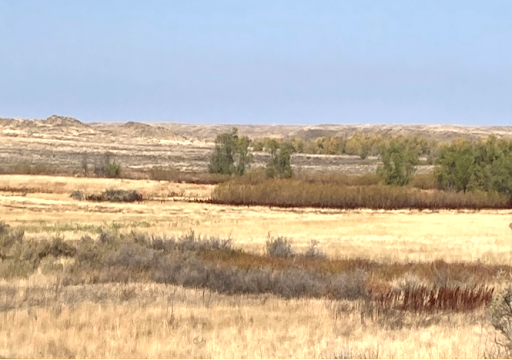
Potential abundant bison habitat on the CMR Refuge


The long-standing hope for restoring wild bison on the Charles M. Russell National Wildlife Refuge is generating an unusual amount of publicity. Unfortunately, the issue is becoming confounded and divisive, diminishing prospects for any solution. The Coalition suggests three foundations for a way forward.

First, bison for the CMR Refuge has to become a national issue. Montana will not participate in a reintroduction for the foreseeable future. The Department of Interior must restore bison to the Refuge unilaterally.

In 2021, the Montana legislature and Governor put a legal capstone on 110 years of Montana opposition to bison restoration in the state. Prohibiting bison restoration by the state will not be changed without voiding laws by a very different legislature and Governor. Promoting stakeholder support for bison in isolation from numerous other partisan political issues will not accomplish this change. It is time to recognize that many decades of Montana political opposition to bison will continue. This opposition has violated the Refuge obligation for federal/state cooperation that produces timely and effective management of the Refuge and justifies federal action on the Refuge without Montana support.

Second, we propose the issue of restoring wild bison be considered separately from the much larger issues of environmental justice and Native American reparations, including the “Land Back” movement. These larger issues are complex and involve alternative beliefs, perspectives and interpretations of history. Consensus on these issues may never occur, rendering bison restoration on the Refuge improbable.

We believe the issue of bison restoration should focus on but two issues: What are the values associated with Tribal-trust bison, and what are the values associated with public-trust bison on public lands; and how can we best achieve both these goals. This is the way forward for any foreseeable progress.

Third, achieving both these sets of goals and their respective values, should be a cooperative, not divisive process. Many Tribes seek access to bison and bison habitat for cultural, spiritual, nutritional and commercial values. The Coalition supports achievement of these values. In contrast, goals for public-trust bison on a federal Refuge, as stated in federal law, are biological diversity and integrity and recreational benefits for the general American public, including Native Americans. The two sets of goals are, in many ways, incompatible. But goals for Tribal-trust bison can be maximized on Tribal lands; goals for public-trust bison can be maximized, perhaps only, on National Parks and Refuges. Each side of this already divisive issue should act to promote achieving both sets of goals in this manner. We should focus on the goals, and how best to mutually achieve them.


Sunday, 15 August 2021

Wild Bison Lose Two More Great Friends And A Supporting Organization


Joe Gutkowski


Recent months and an aging generation have produced sorrowful times for proponents of public-trust wild bison on the Charles M. Russell National Wildlife Refuge. Last year’s passing of Jim Posewitz foreshadowed an end to Montana’s prolonged efforts to restore a wild bison herd to the state. The 2021 legislature ignored Jim’s final advice, foreclosing all Montana efforts toward wild bison for the foreseeable future.

More recently, two more of our comrades, Joe Gutkowski of Montana and Valerius Geist of Canada, left us for the last time.

Joe Gutkowski passed at the age of 94. Beginning as a smoke-jumper and fire fighter, Joe had a long career with the U. S. Forest Service, always a spokesperson for forest management to benefit all the American people. Then, in a long retirement, Joe continued his conservation activities, particularly for wild rivers, wildlife, and especially bison restoration. Joe was an early advocate for the ambitious Big Open project, and was a strong supporter of the Montana Wild Bison Restoration Coalition. We, and the bison, miss Joe.

Valerius Geist was less well-known in Montana. Val was an artist, philosopher (lover of learning) and, above all, a biologist based in evolutionary biology. His interests, centered on large wild mammals of the Northern Hemisphere, generated about 20 books. These included Buffalo Nation: History and Legend of the North American Bison. He wrote: “Keeping bison in fenced spaces is a stop-gap conservation measure at best. Protected in enclosures, buffalo are inadvertently managed for tractability and they are on their way to domestication. This includes weakening or destroying their anti-predator abilities through genetic decay.” Val’s efforts to educate the public, and much of the profession of wildlife management, on the requisites for preserving wildness, have yet to be realized.

Also sadly, the Montana Sierra Club has decided to withdraw as a supporter of the Montana Wild Bison Restoration Coalition. The Club disagrees with our insistence, supported by federal law, that any bison restored to the Charles M. Russell Refuge must be public-trust bison for purposes of benefitting all the general American public. 


Wednesday, 11 August 2021

Coalition Supports Dual Approach To Federal Bison Restoration


The Montana Wild Bison Restoration Coalition has petitioned Department of Interior Secretary Deb Haaland and the U. S. Fish & Wildlife Service to proceed on separate parallel paths for restoring bison on Native American lands and on federal lands, including the Charles M. Russell Refuge. Secretary Haaland oversees both the Fish & Wildlife Service and the Bureau of Indian Affairs.

Following Montana’s most recent rejection of bison restoration by the legislature and governor (News 23 May), two competing proposals have arisen for federal restoration of bison on the Russell Refuge. A proposal supported by Native Americans would have Tribal-trust bison on the federal refuge, administered by an inter-tribal council and managed by Tribal biologists, with emphasis on bison for cultural, spiritual and nutritional needs of an unspecified number of Tribes. This proposal was developed largely with support of the National Wildlife Federation (News 19 June). Its application would compromise Congressional mandates for biological diversity and integrity on the Refuge.

Our Coalition preferred restoring public-trust bison on the Refuge, with benefits for all Americans, including Native Americans, as mandated by Congress (News 1 July). Competition between the two proposals has become divisive at a time when respectful teamwork and cooperation are much needed in American politics. We suggested that the Department of Interior initiate a dual-program of bison restoration to best fulfill the overlapping, but somewhat incompatible goals of these two proposals.

Tribal goals for bison management can best be fulfilled on Tribal lands, not through compromising statutory mandates on the Wildlife Refuge System. At least 69 Tribes in 19 states already have over 1500 square miles dedicated to bison herds. Department of Interior should continue to support expansion and management of bison herds in Indian Country. This proposal is outlined in House Bill 5153 that was introduced in 2019 by then Congresswoman Haaland. Much of it can be facilitated by administrative actions under existing law.

Along a parallel track, Department of Interior should accelerate achievement of already established federal goals for restoring public-trust bison, and securing the wild bison genotype, on National Parks and Wildlife Refuges. Restoration of bison on the Russell Refuge is the best opportunity to satisfy these goas south of Canada (News 1 July).