Showing posts with label keystone species. Show all posts

Monday, 13 March 2023

Interior Department Prioritizes Tribal Bison: Commitment to Maintain Wild Bison Uncertain

Coalition Promotes Two Equal Tracks for Interior Department Bison 


A March 4 Department of Interior News Release, based on Secretary Haaland’s Order 3410, describes a new federal commitment to restore “wild and healthy” populations of bison on American grasslands. It states that Native American led opportunities to establish new large herds owned or managed by Tribes will be centrally prioritized. A “shared stewardship plan” is described in 3410. As presented, shared stewardship implies co-management and some degree of co-control of public bison with Tribes. Unfortunately, “wild and healthy” are not defined, and neither the news release nor 3410 recognize laws mandating Interior to restore truly wild public-trust bison in National Parks and Refuges, and these documents do not acknowledge almost certain conflicts between these obligations and Tribal goals.

As background, a misrepresentation of 19th century bison history occurs in the news release and in 3410. The complicated eradication and near extinction of bison is presented emphasizing a “U. S. policy” intended to “harm and control” Tribes that depended upon bison. This oversimplification of history is common in today’s media. In reality, bison were near-eradicated for several reasons including commercial harvests as well as to “control” Tribes. Both Euro-Americans and Native Americans participated, though not always equally or for the same purposes. A selective, biased presentation of 19th century history should not be used to justify exceptional access to public bison for Tribes today. A more complete and authentic history would recognize our common humanity and be less divisive in today’s world. We cannot heal what we do not reveal.

Today, plains bison exist in private commercial herds, in Tribal herds, and in “conservations herds” owned by government agencies, The Nature Conservancy or by American Prairie. Only 13 herds are fully controlled by the Department of Interior. For plains bison in the USA, the most important conservation issue is the long-practiced and continuing domestication of bison with loss of wild genetics. Restoration and maintenance of wildness in bison requires a large herd to forestall effects of genetic drift, minimizing artificial selection practices, and maximizing natural selective forces, to the extent practicable. (See elsewhere on this website under the toolbar “Why Wildness”.) Most bison herds are small and subject to some, usually a lot of, artificial selection. Domestication is most pronounced in commercial herds containing the vast majority of plains bison. For bison in the USA, only 13 federal herds within National Parks and Wildlife Refuges have a reliable mandate, in the law, to restore and maintain wildness. These herds are critical to the future wildness of our plains bison.

The Department of Interior has dual obligations for bison management – centered in its Bureau of Indian Affairs, the National Park Service and the Fish & Wildlife Service. Tribal goals vary among tribes and have varied with time, as indicated by the limited but consistent information available for current Tribally-owned herds. Tribal goals appropriately emphasize Tribal nutrition and economic development, with management for abundant production. This emphasizes artificial selection that is not compatible with National Park and Federal Refuge mandates for wildness.

Today, 63 Tribes own over 20,000 bison (Intertribal Buffalo Council website). Almost all these herds are small such that genetic drift augments preponderant artificial selection. This compares to only 13 federal herds with about 10,000 bison. Only 2 of these federal herds have at least 1000 bison, possibly sufficient to forestall effects of genetic drift in weakening natural selection.

Despite the above disparity and the overwhelming threat of domestication to plains bison, Haaland’s news release and 3410 emphasize support for more Tribal bison, including “shared stewardship” and “prioritizing Tribal led opportunities” to enhance bison on federal lands. Mandates of the Department of Interior emphasizing natural selection that is not compatible with major Tribal goals requiring artificial management are relegated largely to an appendix of 3410. The stark inadequacy of Interior’s few, mostly small, bison herds to avoid further domestication is not mentioned.

The Charles M. Russell National Wildlife Refuge lies in the center of this disparity. It is the largest federal refuge within the historic range of plains bison. It has no bison, despite decades of efforts to promote restoration. It is the most obvious federal opportunity to establish a “large, wide-ranging bison herd subject to the forces of natural selection, where their role as ecosystem engineers shapes healthy and diverse ecological communities (Section 3,f; appendix to 4310). The Refuge Improvement Act (1997) provides a clear mandate for this important goal. Tribal co-management may be illegal and would threaten the necessity to minimize artificial management for bison production on the CMR.

The Bison Coalition has supported a two-track approach to achieving the goals of Haaland’s bison initiative. (See NEWS, August 11 and 21, 2021, this website.) We should support Tribal bison for Tribal needs on Tribal lands; but the critical status of federal bison, with but 2 large herds to save wild bison genomes, and Congressional mandates for the Park Service and for Federal Refuges, dictate a separate management track focused on bison wildness.

(Possible introduction of wild bison on BLM or Forest Service lands, likely under state management, is not addressed here. It will be politically difficult; but could occur based on Tribal political support. The subject of Tribal co-management of such bison on federal multiple-use lands is beyond the scope of these comments. Any devil would be in the details to be negotiated.)


Monday, 16 May 2022

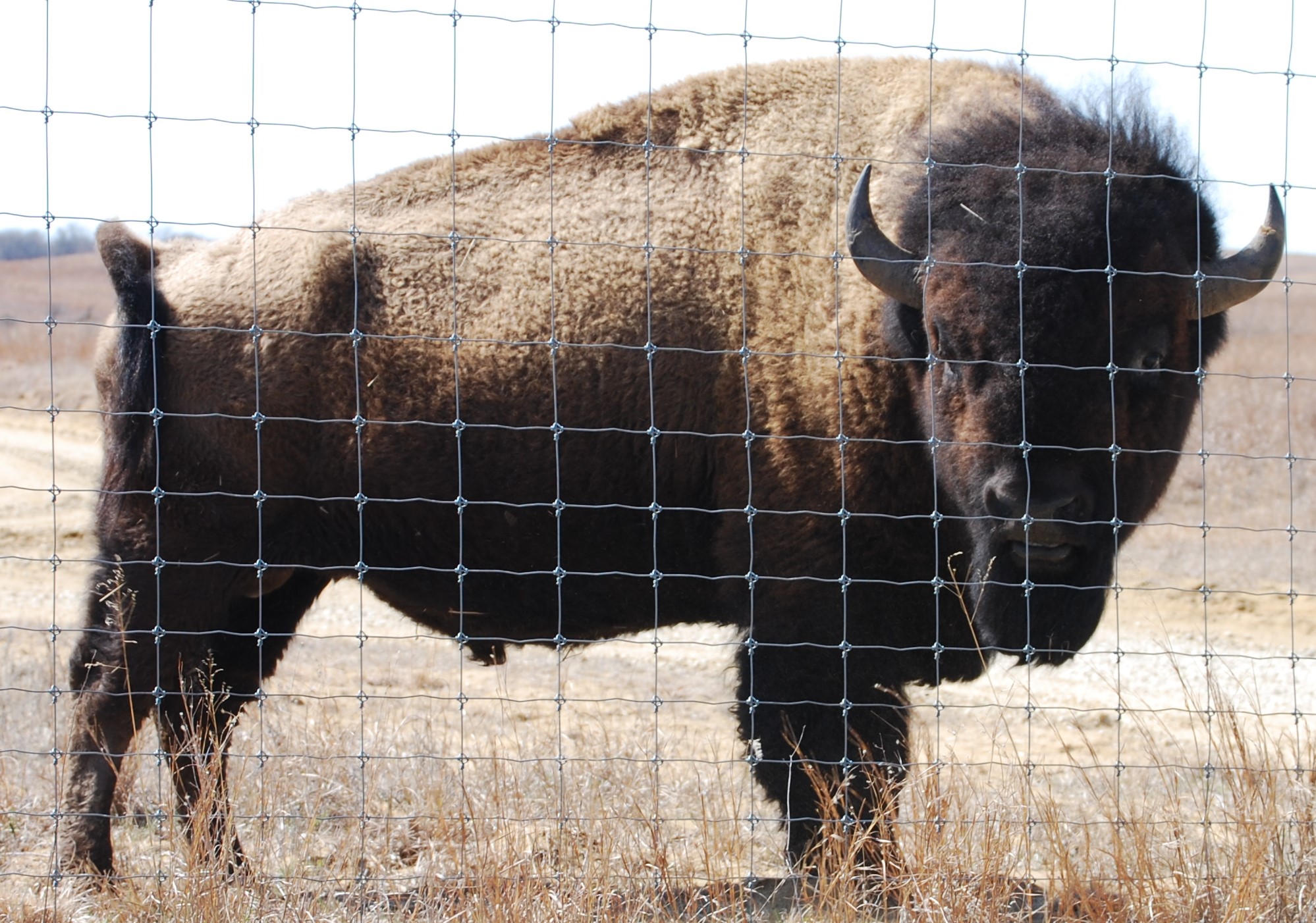
Interior Department’s Bison Conservation Initiative May Accept Defeat Redefining “Wildness”


 This decade of the 2020’s, with a focus on endangered species, has brought what environmentalists describe as a “war on wildlife”. Centered in this war are two Department of Interior agencies, the Park Service and the Fish & Wildlife Service. The battles are politically difficult. Rather than lamenting defeat, and informing Americans of our continuing demise, the Department of Interior may simply redefine “victory”.

The Park Service is mandated to save ecosystems and species “unimpaired”. The federal Refuge System is mandated to preserve biodiversity and biological integrity on refuge lands. These mandates were generated by an American interest and passion for “wildness”.

But as our human population grows, requiring occupation and conversion of ever-more landscape, many components of the natural world either disappear or adapt to and become dependent upon domesticated environments. Wilderness and wildlife are disappearing. In public dialogue, failing to reveal and emphasize this trend fosters public indifference, allowing an ever-faster demise of natural resources.

We define “wild” as one extreme in a continuum from the other extreme of domestication. Wildness requires a preponderance of natural selection over the forces of artificial selection and genetic drift. As preponderance of natural selection declines, wildness is lost by degrees. “Wild” is a qualitative, not absolute, condition. The decline of wildness is a gradual, insidious process.

In its Bison Conservation Initiative, the Department of Interior commits to maintaining the wild character of bison, allowing forces of natural selection to operate – to the extent possible. But a recent Department release (Foundations for Recognizing Bison as Wildlife) emphasizes that “not all forces of natural selection” are necessary for bison wildness. It provides little discussion of how human-caused artificial selection and genetic drift diminish and replace natural selection, of the many management practices that comprise artificial selection, that loss of natural selection leads to domestication of the species, or that possibilities for natural selection are “impossible” only because of economic or political constraints. A commitment to maximizing biological wildness, to the extent practicable, is not emphasized. Gradual depletion of wildness is not recognized. The Foundations document allows federal bison managers to rationalize and accept artificially maintained bison as “wild”.

The Foundations document implies that what is politically possible in preserving wildness is “good enough”. We see too many non-government conservation organizations embracing this idea. The public, often unwittingly, gives government agencies mandates while also providing little decision-space for their fulfillment. The legacy of wildness to future generations is at stake.   


Sunday, 27 March 2022

Article Recognizes Limitations of Tribal Herds for Rewilding Bison


A January article in Frontiers of Ecology and Evolution (cited below) reviews the potential of bison restoration for Tribal food sovereignty on the Northern Great Plains. Authored by Hila Shamon of the Smithsonian Conservation Biology Institute, the article has 30 co-authors representing numerous Native American Tribes and three major public conservation organizations (Defenders of Wildlife, Wildlife Conservation Society, World Wildlife Fund).

Diverse values of Tribal bison herds are emphasized: nutritional, economic/commercial, spiritual/cultural/educational values, and the ability of bison herds to ecologically restore native ecosystems on the Plains. These values are emphasized due to overriding and vital needs for nutritional and economic benefits to Tribal communities.

Authors barely, and indirectly, recognize the ongoing domestication and genetic deterioration of wild plains bison.

Moreover, the article injects a semantic complication into the social/political issue of bison domestication vs. recovery of wildness. We have always defined “rewilding” as a condition in which the genome-effects of natural selection are predominant over combined effects of human-caused artificial selection and genetic drift. This article defines this condition as “true restoration”. It defines “rewilding” as an imperfect version of true restoration: “the reorganization and redevelopment of the species and its ecosystem under new environmental conditions”. This justifies the continuing domestication of American plains bison, branding it with a misleading euphemism.

The article offers three Tribal herds in Montana and one in South Dakota as examples in which “overarching goals are to enhance the cultural, economic and ecological health of the Tribes and their lands”. Presented data on sizes of herds and “pastures”, and other management practices, demonstrate the contribution of these herds to plains bison domestication.

We do not criticize Tribal emphasis on nutritional, economic and cultural values in their bison management and agree these are overriding needs. They are exacerbated by limits of available Tribal lands, intermingling of non-Tribal lands within reservations, and by social aspects of competition from Tribal cattle operations on reservations.

Looking to the future, the article suggests allowing bison on large federal lands under Tribal/federal co-management. It is stated that rewilding and Tribal economic/nutritional/cultural benefits from bison “are not mutually exclusive”, implying that each can be produced to a satisfactory degree within one large herd. We disagree and have suggested that wildness, forestalling domestication of bison, will only be adequately maintained in a few large National Parks and Refuges suitable for large bison herds, according to the mandated missions of these agencies. The future of these bison and Tribal bison should proceed on different parallel tracks.

While the article describes Tribal efforts as “leading the way” in overall bison restoration, it clearly demonstrates that restoring wildness of bison and of their grassland ecosystem is not occurring in Tribal herds – and makes the contention that this wildness can be achieved with Tribal/government co-management on federal lands dubious.

Lasting political constraints, generated by the livestock industry and involving perceived states’ rights, prevent the wider USA population from counteracting domestication of plains bison and their habitats. The continued success of this political opposition to bison restoration on federal lands depends a great deal on the indifference of major non-government conservation organizations, including those co-authoring this article.

It is past time for major non-government conservation organizations to work both sides of the bison conservation fence!

Shamon, H. et al. 2022. The Potential of Bison Restoration as an Ecological Approach to Future Tribal Food Sovereignty on the Northern Great Plains. frontiersin.org/articles/10.3389/fevo.2022.826282/full


Tuesday, 1 February 2022

“The Ecological Buffalo”: To be Available in July!


We have been anticipating publication of “The Ecological Buffalo” by Wes Olson and Johane Janelle. The University of Regina Press has released a pre-publication announcement and sale, expecting shipment on July 9 (much delayed by COVID-caused shortages of paper and ink).

Wes Olson, now retired, has worked with and managed bison in Canada for 35 years. Johane Janelle provides stunning full-color photographs. UR Press describes the paperback book: “An expert on the buffalo tells the history of this keystone species through extensive research and beautiful photographs – a story that takes the reader on a journey to understand the myriad connections this keystone species has with the Great Plains.” The intricacy of relationships bison once had with thousands of species is the subject of this book.

This important work will inform and help justify efforts to restore public, wild bison herds to the Great Plains, including on the Charles M. Russell National Wildlife Refuge. In the USA, the Wildlife Refuge Improvement Act directs the Fish & Wildlife Service to restore, to the extent practicable, the biological integrities of wildlife and their ecosystems on our federal refuges. However, “biological integrity” is a term easily passed over by all but the most informed readers. We believe Olson’s book will, with numerous examples, demonstrate that the biological integrity of ecosystems of the Russell Refuge cannot be restored without bison. With occasional wildfire, bison were once the most important “managers” of what is now the Russell Refuge, including its native plants and other wildlife.

The Ecological Buffalo is a must-have reference for individuals and organizations that promote restoration of truly wild bison as a keystone species in some historic plains bison habitats.

We’ve ordered our copy of The Ecological Buffalo. Cost, including shipping is $51 Canadian dollars. To see more, visit uofrpress.ca/Books/T/The-Ecological-Buffalo.